The playing surface
Why turf quality matters
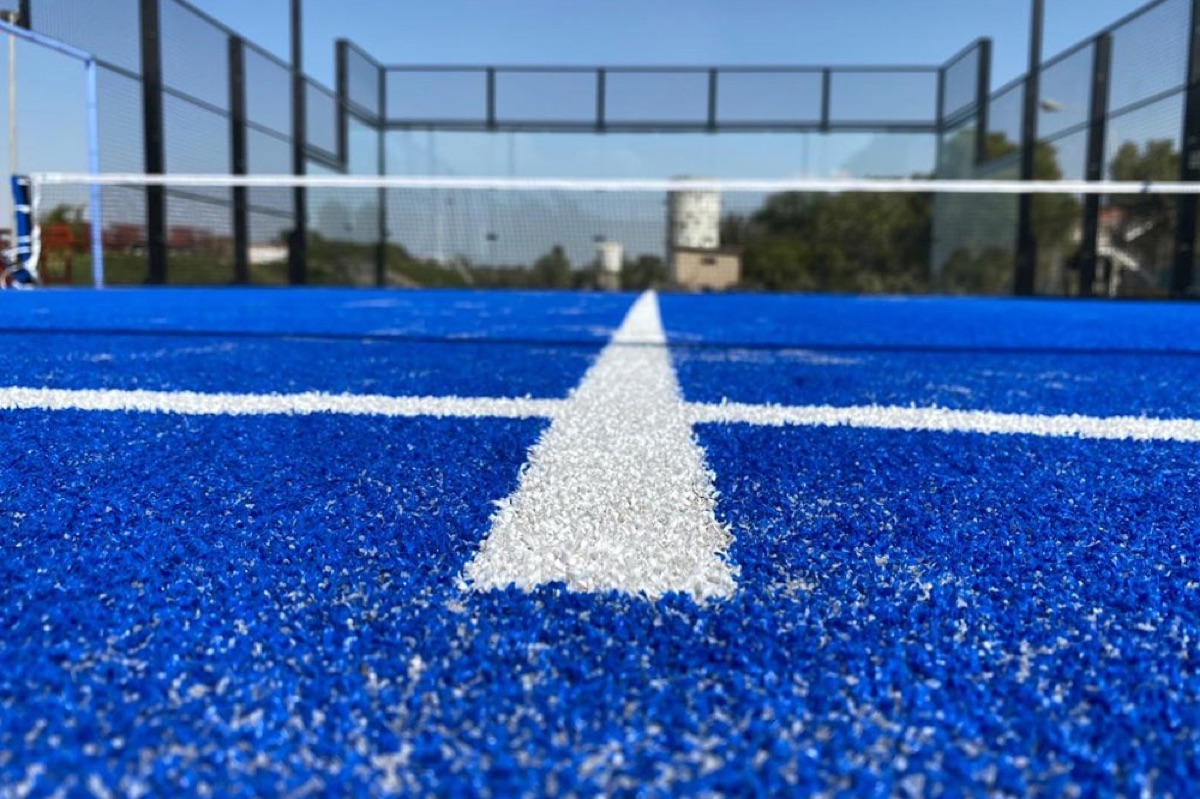
The playing surface is where players spend 100% of their time. A quality artificial turf system directly impacts player comfort, safety, ball behavior, and the longevity of your investment.
We work exclusively with proven turf systems that meet international padel federation standards, ensuring consistent play characteristics and durability even in Thailand's challenging tropical climate.
Key performance factors
Ball speed, slide characteristics, shock absorption, and water drainage all depend on proper turf selection and installation.
Surface options
Types of padel turf
Fibrillated Turf
The most common choice for padel courts. Wide, flat fibers that split over time for a natural appearance and consistent ball roll. Excellent durability and value.
- 12-15mm pile height
- Best for outdoor courts
- Requires sand infill
- 8-10 year lifespan
Monofilament Turf
Premium option with individual blade-like fibers. Offers excellent resilience, more natural appearance, and premium playing characteristics.
- 12-14mm pile height
- Superior ball response
- Higher cost
- 10-12 year lifespan
Hybrid Systems
Combines fibrillated and monofilament fibers for balanced performance and cost. Increasingly popular for professional facilities.
- Best of both worlds
- Optimized for padel
- Good durability
- Growing preference
Infill system
The role of sand infill
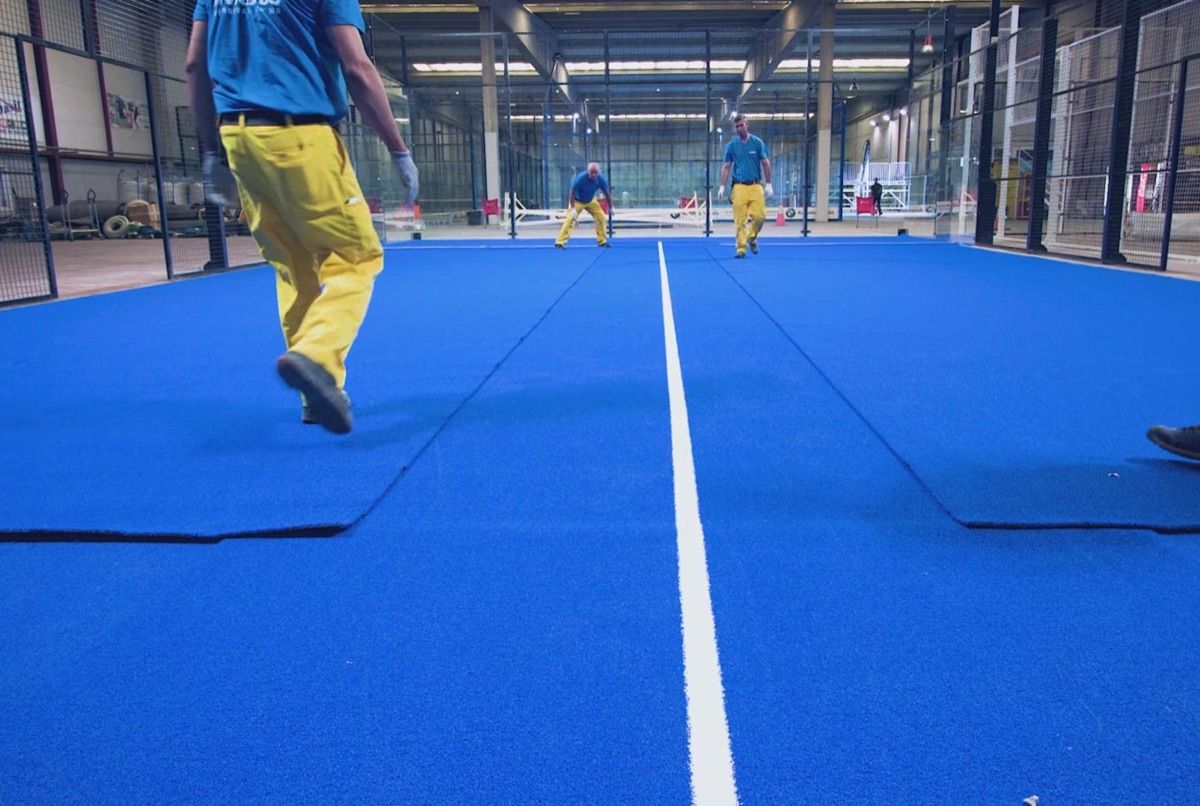
Sand infill is critical to padel turf performance. It stabilizes the fibers, provides the right amount of slide for player movements, and helps the surface drain quickly after rain.
- Silica sand: rounded grains prevent fiber damage
- Application rate: 4-6 kg per square meter
- Grain size: 0.3-0.8mm diameter
- Depth: should reach 70-80% of pile height
Proper sand distribution requires specialized equipment and expertise. Uneven infill leads to inconsistent play characteristics and premature wear.
Drainage
Water management system
Why Drainage Matters
Thailand's monsoon season brings intense rainfall. Without proper drainage, courts become unplayable for extended periods, impacting revenue and player experience.
Our drainage systems are designed to handle 60+ mm/hour rainfall rates, ensuring courts are playable within 15-20 minutes after heavy rain.
Drainage Components
- Permeable turf backing: allows water to pass through
- Aggregate base layer: graded stone for water flow
- Perimeter channels: collect and direct runoff
- Subsurface drains: French drains where needed
- Slope design: subtle grading (0.5-1%)
Maintenance
Keeping your turf in top condition
Daily
- Remove debris/leaves
- Check for damage
- Spot clean spills
Weekly
- Brush fibers upright
- Redistribute sand
- Check seams
Monthly
- Deep clean high-traffic areas
- Check drainage
- Inspect infill levels
Annually
- Professional deep clean
- Infill top-up
- Full inspection
Pro tip: brushing direction
Always brush against the pile direction to keep fibers upright. Flat fibers lead to inconsistent ball behavior and accelerated wear.
Specifications
Turf technical data
| Parameter | Recommended | Notes |
|---|---|---|
| Pile Height | 12-15mm | Shorter = faster play |
| Pile Density | 45,000-55,000 stitches/m² | Higher = better durability |
| Fiber Material | Polyethylene (PE) | UV-stabilized for tropics |
| Backing | Polyurethane or latex | Must be permeable |
| Sand Infill | 4-6 kg/m² silica | Rounded grains only |
| Color | Blue or Green | Blue most popular for padel |
| UV Resistance | 3,000+ hours | Critical for Thailand |
| Expected Life | 8-12 years | With proper maintenance |